


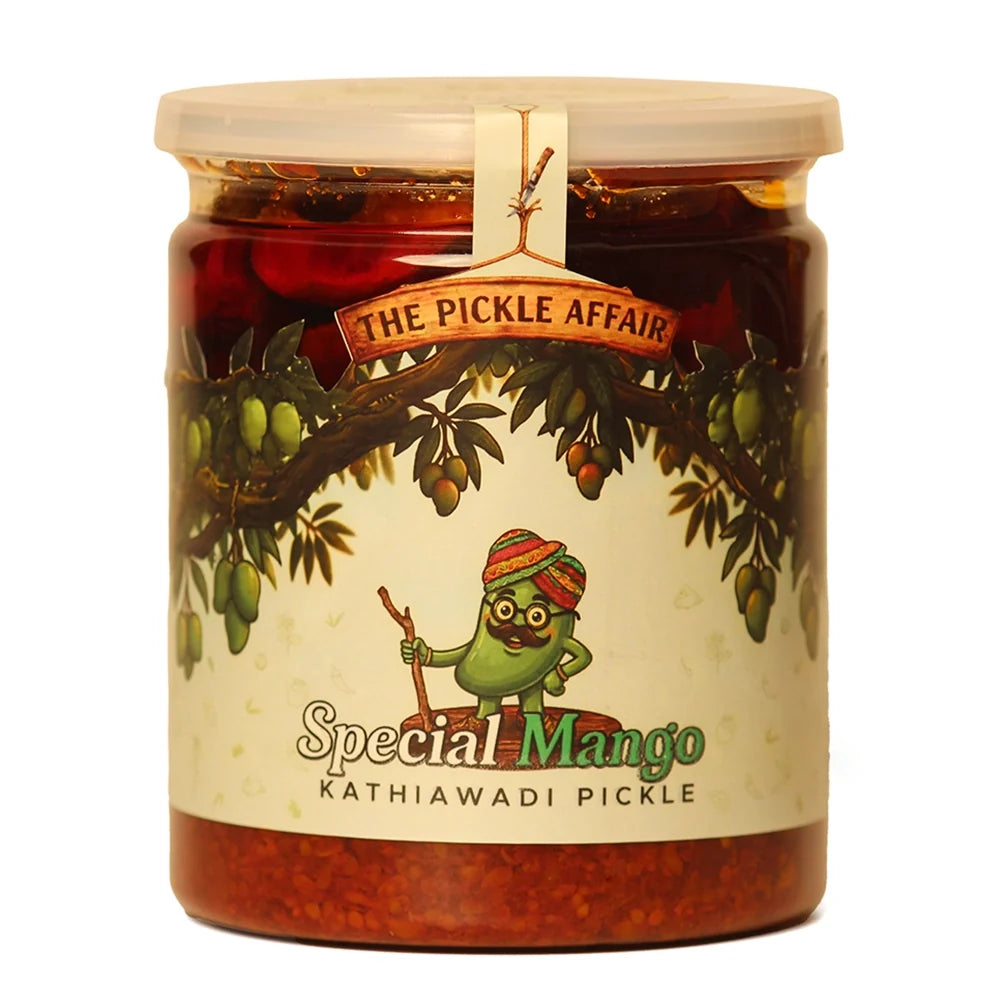
Mix Achar vs Single-Flavour Pickle: Which Jar Should You Buy First? — practical guidance from The Pickle Affair’s Kathiawadi kitchen. Learn about mix achar
In this guide
- Quick answer
- Deep explanation
- Practical steps / choosing path
- Common mistakes
- Related collections and products
- FAQs
Quick answer
Chhundo and Meethi Keri are both sweet mango traditions, but they differ in cut, texture, and how they show up on the plate. Use this guide to choose the jar that matches your meal.
Chhundo
Typically associated with shredded mango and a sweet-leaning profile — bright with meals that want a relish-like spoon. Families often reach for it with thepla and festive spreads.
Meethi Keri
A sweet mango pickle style centred on keri pieces and a homemade sweet-tang balance familiar in Gujarati homes. Piece texture feels different from shredded chhundo on the tongue.
Side-by-side choosing
- Want shredded relish texture → Chhundo
- Want classic sweet keri pieces → Meethi Keri
- Want jaggery depth instead → explore Gor Keri
- Want spicy contrast on the same thali → add a keri achar from the spicy collection
Exact house recipes stay with the kitchen; this page explains differences at a useful level without inventing proprietary quantities. For shoppers comparing mix achar, texture is usually the deciding factor.
When to buy both
If you gift or host often, a sweet shredded jar plus a sweet piece-style jar covers more guests than two near-identical spicy jars.
Common mistakes to avoid
- Using a wet spoon — moisture spoils traditional achar faster than almost anything else.
- Storing jars next to the stove or in direct sun.
- Buying only on price without matching sweet vs spicy vs specialty to your meals.
- Expecting every “mango pickle” to taste the same — keri, methi, katka, chhundo and gunda styles differ.
- Ignoring the printed best-before on the label.
How this connects to The Pickle Affair kitchen
We write Kitchen Tales from practices we actually follow: Kathiawadi spice logic, hygienic FSSAI-certified preparation context, no synthetic colours, and glass jars suited to home storage. We do not invent awards, medical claims, or proprietary recipe numbers for rankings.
Shop related collections
These collection hubs match this guide’s intent — use them to compare jars before you buy:
Jars to consider from this guide

Homemade Mango Pickle | Aam ka Achar
Handmade Kathiawadi pickle — ships across India.
View Homemade Mango Pickle | Aam ka Achar →
Gunda Keri | Lasode ka Achar
Handmade Kathiawadi pickle — ships across India.
View Gunda Keri | Lasode ka Achar →
Chana Keri Methi Achar | Methia Keri
Handmade Kathiawadi pickle — ships across India.
View Chana Keri Methi Achar | Methia Keri →Related Kitchen Tales
How search intent maps to our pages (block 1)
People researching mix achar usually arrive with one of three jobs: learn, compare, or buy. Kitchen Tales handles learn/compare. Collections handle browse-by-intent. Product pages handle the final jar choice. Keeping those jobs on separate URLs prevents cannibalization and matches how strong D2C pickle brands structure their catalogues.
Competitor catalogues (for example Homepick’s many hubs across sweet, savoury, mango, regional and gifting) show that shoppers expect multiple entry points. We copy the architecture idea, not their sentences: only create a collection when we have real products and a distinct primary keyword.
When you finish this article, open the first collection link, skim the buying guidance and FAQ there, then open at most two product cards. That path converts better than bouncing between random blog posts with no shopping context.
Practical weekly routine for pickle lovers
- Cook your most common meal (thepla, khichdi, or dal-rice).
- Note whether you wanted sweet contrast or spicy brightness.
- Buy one jar in that lane from the matching collection.
- Store it with a dry spoon habit from day one.
- Only then explore specialty jars like Gunda Keri or methi-forward styles.
This routine keeps SEO content honest: every guide should make the next click obvious. If a paragraph does not help you choose a collection, a product, or a storage habit, it does not belong in Kitchen Tales.
Related secondary themes for this topic include: achar masala, pickle powder, achar masala powder, pickle masala, achar pickle masala, aam achar masala powder, pickle spices, mix pickle masala, pickle 1 kg, achar masala 100gm, achar masala 250gm, mixture pickle 1 kg, Tender Mango Pickle, Pickle Mango, Mango Pickle, Mango Achar. Use them as supporting language, not as excuses to publish near-duplicate URLs.
How search intent maps to our pages (block 2)
People researching mix achar usually arrive with one of three jobs: learn, compare, or buy. Kitchen Tales handles learn/compare. Collections handle browse-by-intent. Product pages handle the final jar choice. Keeping those jobs on separate URLs prevents cannibalization and matches how strong D2C pickle brands structure their catalogues.
Competitor catalogues (for example Homepick’s many hubs across sweet, savoury, mango, regional and gifting) show that shoppers expect multiple entry points. We copy the architecture idea, not their sentences: only create a collection when we have real products and a distinct primary keyword.
When you finish this article, open the first collection link, skim the buying guidance and FAQ there, then open at most two product cards. That path converts better than bouncing between random blog posts with no shopping context.
Practical weekly routine for pickle lovers
- Cook your most common meal (thepla, khichdi, or dal-rice).
- Note whether you wanted sweet contrast or spicy brightness.
- Buy one jar in that lane from the matching collection.
- Store it with a dry spoon habit from day one.
- Only then explore specialty jars like Gunda Keri or methi-forward styles.
This routine keeps SEO content honest: every guide should make the next click obvious. If a paragraph does not help you choose a collection, a product, or a storage habit, it does not belong in Kitchen Tales.
Related secondary themes for this topic include: achar masala, pickle powder, achar masala powder, pickle masala, achar pickle masala, aam achar masala powder, pickle spices, mix pickle masala, pickle 1 kg, achar masala 100gm, achar masala 250gm, mixture pickle 1 kg, Tender Mango Pickle, Pickle Mango, Mango Pickle, Mango Achar. Use them as supporting language, not as excuses to publish near-duplicate URLs.
How search intent maps to our pages (block 3)
People researching mix achar usually arrive with one of three jobs: learn, compare, or buy. Kitchen Tales handles learn/compare. Collections handle browse-by-intent. Product pages handle the final jar choice. Keeping those jobs on separate URLs prevents cannibalization and matches how strong D2C pickle brands structure their catalogues.
Competitor catalogues (for example Homepick’s many hubs across sweet, savoury, mango, regional and gifting) show that shoppers expect multiple entry points. We copy the architecture idea, not their sentences: only create a collection when we have real products and a distinct primary keyword.
When you finish this article, open the first collection link, skim the buying guidance and FAQ there, then open at most two product cards. That path converts better than bouncing between random blog posts with no shopping context.
Practical weekly routine for pickle lovers
- Cook your most common meal (thepla, khichdi, or dal-rice).
- Note whether you wanted sweet contrast or spicy brightness.
- Buy one jar in that lane from the matching collection.
- Store it with a dry spoon habit from day one.
- Only then explore specialty jars like Gunda Keri or methi-forward styles.
This routine keeps SEO content honest: every guide should make the next click obvious. If a paragraph does not help you choose a collection, a product, or a storage habit, it does not belong in Kitchen Tales.
Related secondary themes for this topic include: achar masala, pickle powder, achar masala powder, pickle masala, achar pickle masala, aam achar masala powder, pickle spices, mix pickle masala, pickle 1 kg, achar masala 100gm, achar masala 250gm, mixture pickle 1 kg, Tender Mango Pickle, Pickle Mango, Mango Pickle, Mango Achar. Use them as supporting language, not as excuses to publish near-duplicate URLs.
Frequently asked questions
What is this guide about?
It explains mix achar for home cooks exploring Gujarati and Kathiawadi pickles, with links to the right collections and jars.
Does The Pickle Affair use synthetic colours?
No. We focus on traditional spice character without synthetic colours.
Where are products prepared?
The Pickle Affair prepares pickles in an FSSAI-certified kitchen context for hygienic production.
Should I read a collection page or a product page first?
Use a collection page to compare styles, then a product page to choose size and confirm ingredients.
Can you share exact recipe quantities?
House recipes stay with the kitchen. We share useful method and flavour context without inventing proprietary numbers.
How do I store jars after delivery?
Cool, dry place; sealed jar; clean dry spoon. Follow the label for best-before guidance.
Conclusion
If you came here for mix achar, use the collections linked above to shop by intent, then pick an individual jar that matches your meals. Keep storage habits tight, ignore medical hype, and prefer clear labels over the cheapest listing.
Kitchen Tales exists to support those shopping hubs and product pages with honest education — quality over volume, one intent per URL.
Cluster: Buying Guides · Intent: Comparison · Related terms: achar masala, pickle powder, achar masala powder, pickle masala, achar pickle masala, aam achar masala powder, pickle spices, mix pickle masala, pickle 1 kg, achar masala 100gm, achar masala 250gm, mixture pickle 1 kg, Tender Mango Pickle, Pickle Mango, Mango Pickle, Mango Achar
Policy: BLOG.md — target ~1500+ words for standard guides; link collections + products; no invented quantities.


Leave a comment
Your email address will not be published. Required fields are marked *