


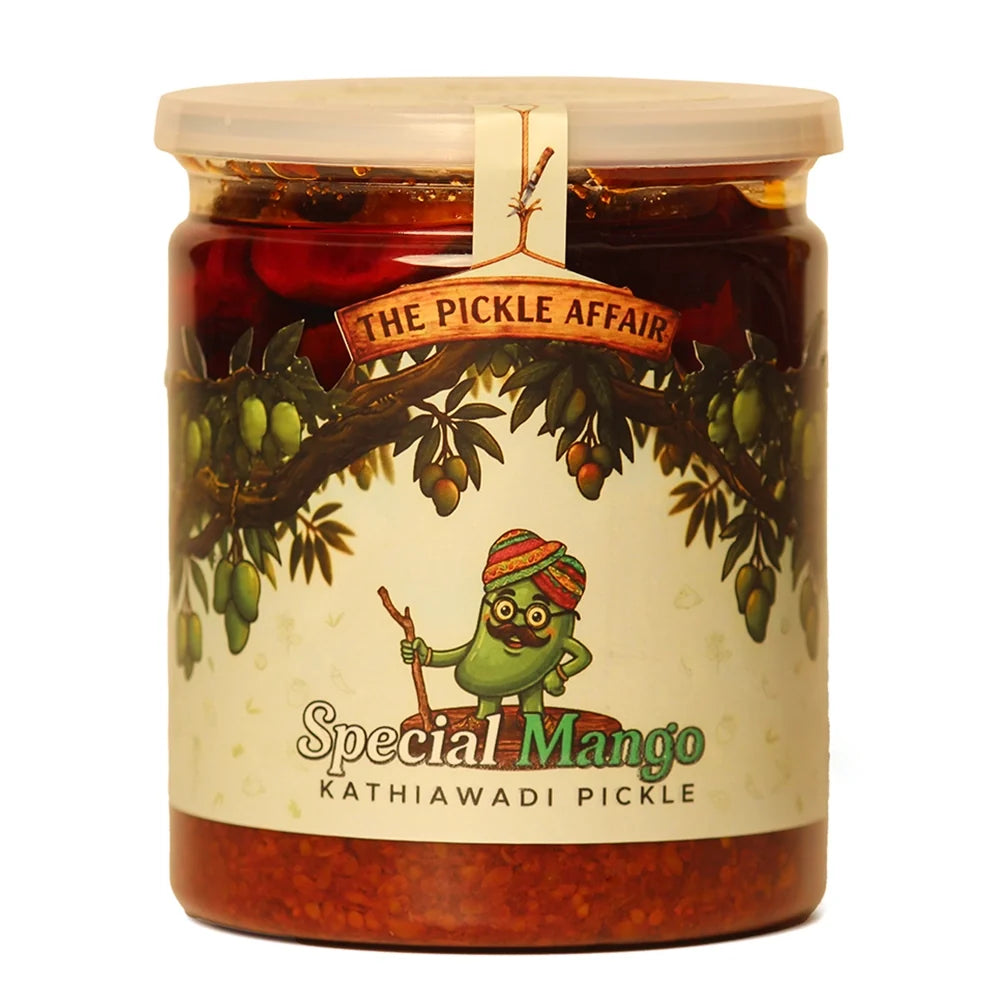
Seeing a white film or spots on your pickle? How to tell mould from harmless salt or solidified oil — and when to throw it away.
In this guide
- Quick answer
- Three things that look white
- If it is mould
- How to prevent it
- Checking a jar step by step
- Why oil turns cloudy
- Other changes that are normal
- Changes that are not normal
- Protecting a jar once it is open
- Why mould appears in the first place
- What to do after discarding a jar
- Sweet pickles and white patches
- Jars to consider
- FAQs
Quick answer
A fuzzy white, green, or grey growth is mould — discard the whole jar. A cloudy or solid layer in cold weather is usually oil that has thickened, and dry white crystals can be salt. When unsure, do not taste it.
Three things that look white
- Mould — fuzzy or cottony patches, sometimes green, grey, or black, often with a musty smell. Unsafe.
- Solidified oil — cloudy, waxy layer in cold weather that melts back at room temperature. Harmless.
- Salt crystals — dry, gritty white specks, usually near the rim. Harmless.
If it is mould
Do not scrape it off and eat the rest. Mould can spread invisibly through the pickle. Discard the whole jar.
Mould almost always starts from moisture — a wet spoon, water droplets from the lid, or pieces left above the oil layer.
How to prevent it
- Use only a completely dry spoon.
- Keep pieces pressed under the oil.
- Close the lid tightly after every use.
- Store away from the sink, stove steam, and sunlight.
- Wipe condensation from the lid in humid weather.
Checking a jar step by step
- Look first without touching. Note the colour and texture of the layer and where it sits — on the surface, on the pieces, or near the rim.
- Smell the jar. A spicy, mustard aroma is normal; a musty, damp, or alcoholic smell is not.
- If the layer is cloudy and waxy and the room is cold, close the jar and leave it somewhere warmer for an hour. Oil that has thickened will clear.
- If there are dry specks near the rim, check whether they are gritty — salt crystals feel like fine sand.
- If anything looks fuzzy or cottony, stop. Do not stir it in, taste it, or scoop it out. Discard the jar.
Why oil turns cloudy
Every cooking oil contains a mix of fats, and some of them start to solidify as the temperature drops. Groundnut oil in particular is known for turning cloudy or partly solid in cold weather or in the fridge. Mustard oil and other oils can also thicken.
The change is physical, not a sign of spoilage. The layer looks pale and waxy, has no fuzz, and melts back to clear oil at room temperature. If you store pickle in the fridge, expect this every time you take the jar out.
You can test this easily: move a cloudy jar to a warmer spot for an hour or two. If the layer disappears and the oil turns clear again, it was simply cold oil. Mould does not melt away with warmth.
Other changes that are normal
- The colour of the masala deepening over weeks.
- Mango pieces gradually softening.
- Masala settling at the bottom and oil rising to the top.
- Sugar or jaggery syrup thickening or crystallising in the cold.
- The aroma mellowing as the raw spice edge fades.
Changes that are not normal
Some signs mean the pickle is spoiling even if you cannot see mould yet: bubbles or fizzing when you open the jar, a lid that bulges, a slimy coating on the pieces, or a sharp alcoholic or yeasty smell. These point to fermentation or microbial growth that should not happen in a properly stored oil pickle.
In all of these cases, discard the jar. Wash and dry the container completely before reusing it.
Protecting a jar once it is open
Most problems start in the first few centimetres of the jar, where pieces may poke above the oil and where moisture from the lid collects. After serving, press the pieces back down with a dry spoon so they sit under the oil.
Wipe the rim with a dry cloth before closing, especially with sweet pickles where syrup can gather. If you open the jar daily, consider decanting a week's worth into a small serving jar so the main jar stays closed.
Finally, trust your senses. A healthy pickle looks glossy, smells of mustard and spice, and has pieces that are firm or pleasantly soft. If a jar ever makes you hesitate, it is safer to throw it away than to taste it and find out.
Why mould appears in the first place
Mould needs moisture and air. A traditional oil pickle limits both: salt pulls water from the mango, and oil keeps air away from it. Mould usually appears where one of those defences has been broken.
The common causes are a spoon that was damp or had touched other food, condensation dripping from the lid, pieces sitting above the oil, or a jar kept near steam. In the monsoon, even opening the jar often in a humid kitchen can let in enough moisture over time.
Knowing the cause helps you protect the next jar. If mould appeared at the surface, the problem was likely the lid or exposed pieces; if it appeared deeper down, a wet spoon is the usual suspect.
What to do after discarding a jar
Empty the jar away from other food, then wash it in hot, soapy water, rinse well, and let it dry completely — ideally in sunlight for a few hours. Wash the lid, including any rubber seal, with equal care.
Check nearby jars as well, especially if they share a shelf that gets damp. Before opening the next jar, make sure your serving spoon is completely dry and set aside only for pickle.
Sweet pickles and white patches
Sweet pickles such as Chhundo, Meethi Keri, and Gor Keri can show different kinds of white or pale patches from oil pickles. Sugar crystals form in cool weather and look like small, hard, glittering grains, often around the rim or on the surface of the syrup. They dissolve when the jar warms up or when you stir with a dry spoon.
Mould on a sweet pickle looks the same as on any other food: soft, fuzzy, cottony growth, sometimes green or grey, usually with a damp smell. Sweet syrups draw moisture from the air, so a lid left loose in humid weather is a common cause.
As with oil pickles, if you are unsure whether you are looking at crystals or mould, do not taste. Crystals feel gritty and hard; mould is soft and fuzzy.
How much pickle to serve
Traditional achar is strong by design. One level teaspoon beside a roti or a bowl of rice is usually enough for one person; a festive thali might carry two different teaspoons — one sweet and one spicy. Serving more than that tends to drown the meal rather than lift it.
For a family of four eating pickle at one meal a day, a 500 g jar typically lasts a few weeks. A household that only opens pickle on weekends is better served by a 250 g jar, which gets finished while the flavour is at its best.
Shop related collections
These collection hubs match this guide’s intent — use them to compare jars before you buy:
Jars to consider from this guide

Homemade Mango Pickle | Aam ka Achar
Handmade Kathiawadi pickle — ships across India.
View Homemade Mango Pickle | Aam ka Achar →
Katka Keri Pickle | Homemade Gujarati Mango Achar
Handmade Kathiawadi pickle — ships across India.
View Katka Keri Pickle | Homemade Gujarati Mango Achar →Frequently asked questions
Is a white layer on pickle mould?
If it is fuzzy or has coloured spots, yes — discard the jar. A waxy layer in cold weather is usually thickened oil.
Can I remove mould and eat the rest?
No. Discard the whole jar.
Why did my pickle get mould?
Usually moisture from a wet spoon, lid condensation, or pieces above the oil.
Why does pickle oil turn white in the fridge?
Some fats in oil, especially groundnut oil, solidify in cold. The layer clears at room temperature and is harmless.
Is fizzing in pickle normal?
No. Fizzing or bubbles suggest fermentation or spoilage; discard the jar.
Can salt crystals form on pickle?
Yes. Dry, gritty white specks near the rim are often salt and are harmless.
Should I wash the lid if I see condensation?
Wipe it completely dry. If you wash it, make sure the lid and seal are fully dry before closing the jar.
Does The Pickle Affair use synthetic colours?
No. Colour comes from the spices, turmeric, chilli, and mango themselves.
Who makes The Pickle Affair pickles?
The Pickle Affair is a brand of Arham Foods, packed in Maharashtra under FSSAI licence 21521053000490.
Conclusion
Fuzzy means discard; waxy in winter means oil. A dry spoon prevents most problems.


Leave a comment
Your email address will not be published. Required fields are marked *