


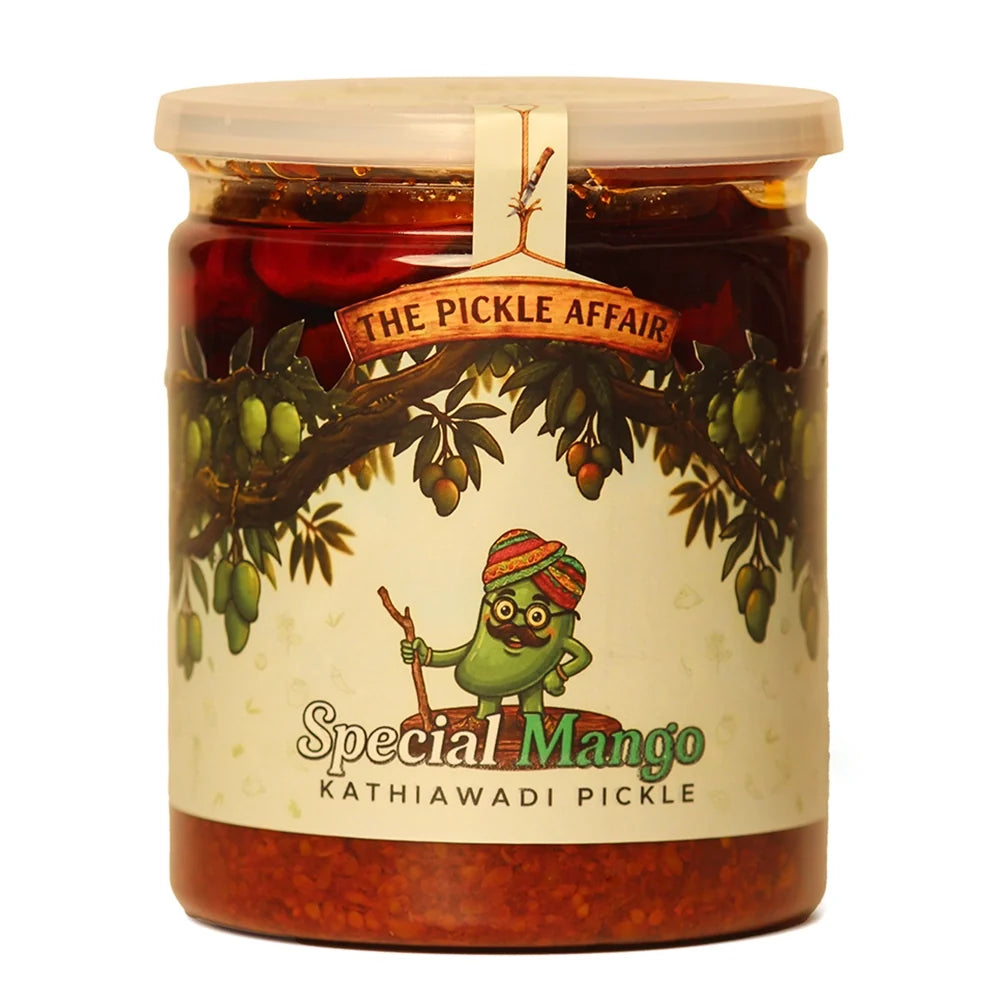
Why mustard oil shows up in Gujarati and Kathiawadi pickles — flavour, tradition, and practical jar care — without medical or ‘superfood’ claims.
Quick answer
Mustard oil is common in many Gujarati and Kathiawadi pickle traditions because of its aroma and how it works with spice-cured jars — a culinary choice, not a medical claim.
Flavour role
Mustard oil has a distinctive pungency that sits well with mango, chilli, and methi-forward profiles. It is one reason regional achar smells “like home” to many families.
Practical jar habits
Oil-cured styles still need dry spoons and sealed storage. Oil does not forgive wet utensils or hot stove-top storage.
How we talk about it at The Pickle Affair
We stick to traditional cooking character and label transparency. We do not invent health miracles or certifications we do not hold beyond our stated FSSAI-certified kitchen context.

Homemade Mango Pickle | Aam ka Achar
Handmade Kathiawadi pickle from The Pickle Affair — ships across India.
View Homemade Mango Pickle | Aam ka Achar →
Katka Keri Pickle | Homemade Gujarati Mango Achar
Handmade Kathiawadi pickle from The Pickle Affair — ships across India.
View Katka Keri Pickle | Homemade Gujarati Mango Achar →Related Kitchen Tales guides
- How to store Indian pickles
- Gujarati Keri Achar
- Katka Keri storage & serve
- How Baa’s Kitchen makes pickles
- Fenugreek in mango pickle
Frequently asked questions
Why use mustard oil in pickle?
In many Gujarati/Kathiawadi traditions, mustard oil contributes aroma and is part of how jars are cured and kept — culinary tradition, not a medical prescription.
Is every pickle identical in oil choice?
No. Houses and styles vary. Always read the label for the jar you buy.
Written from The Pickle Affair’s Kathiawadi kitchen · Cluster: Health & Spices · Intent: Ingredient education
Policy: BLOG.md — quality over volume. No invented recipe quantities.


Leave a comment
Your email address will not be published. Required fields are marked *