


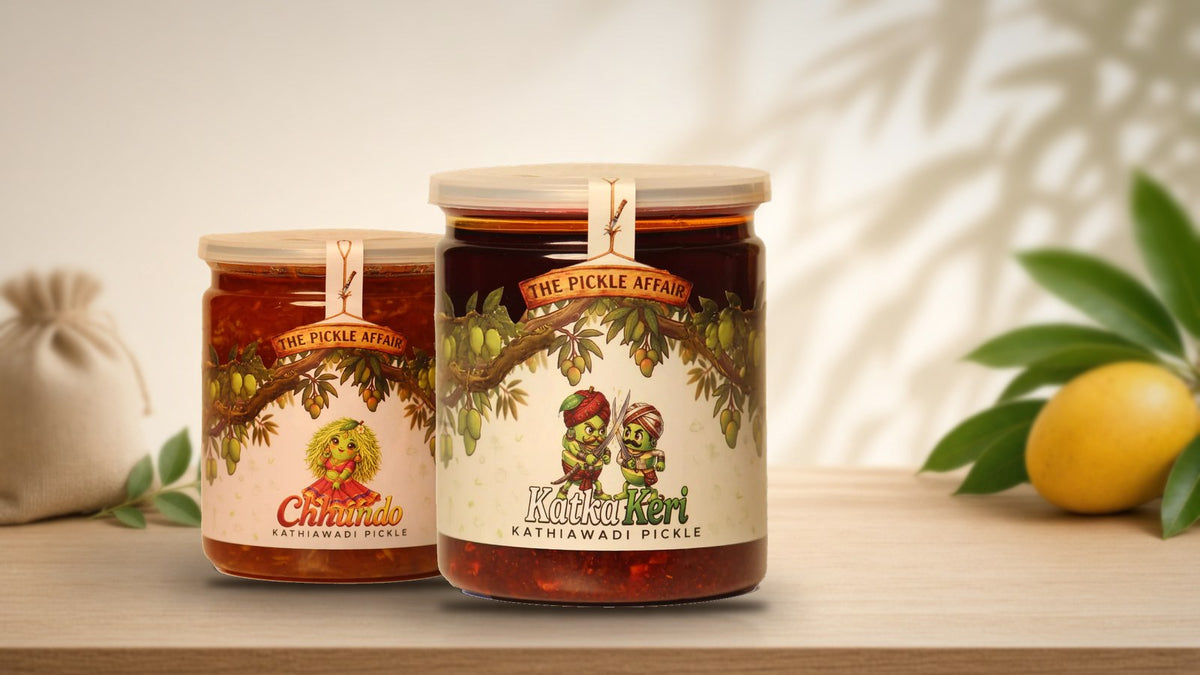
How pickles are shipped in glass jars, what changes in transit, and exactly what to check when your pickle parcel arrives.
In this guide
- Quick answer
- Why pickles travel in glass
- What keeps a jar from leaking
- How a well-packed pickle parcel is put together
- What happens to pickle during transit
- Oil-based vs sweet pickles in transit
- What to check on arrival
- What is normal and what is not
- If something is wrong
- Your first steps after unboxing
- Reusing the jar and packing
- Sending pickle to family yourself
- Jars to consider
- FAQs
Quick answer
Pickles are usually shipped in sealed glass jars because glass does not react with oil, salt, or sour mango. A well-packed jar travels upright, cushioned, and with a tight lid. When the parcel arrives, check the box for oil stains, the jar for cracks, and the lid for a firm seal before you open it.
Why pickles travel in glass
Pickle is oily, salty, and acidic, and it sits in its container for a long time. Glass is non-reactive, so it does not take on flavours or interact with the oil and sour mango. It is also easy to clean, and it lets you see the pickle before you open it.
In older homes the same job was done by glazed ceramic barnis. Glass does it today because it is easier to seal and travels more reliably. The trade-off is weight and fragility, which is why packing matters so much.
What keeps a jar from leaking
Leaks usually start at the rim. A jar that is filled cleanly, with no oil or masala left on the rim, gives the lid a proper seal. A little headspace at the top lets the contents move slightly without pressing against the lid.
Oil-based pickles are designed to have a layer of oil over the pieces. In transit that oil moves around, so a tight lid matters more than anything else. Sweet pickles like Chhundo have a thick syrup that moves less, but still need a well-sealed lid.
How a well-packed pickle parcel is put together
- Sealed lid — tightened firmly, often with an inner seal under the cap.
- Wrap around the jar — so glass does not touch glass or the sides of the box.
- Cushioning — filler around and between jars so they cannot shift.
- Upright position — jars standing up so oil stays over the pickle and away from the lid.
- Sturdy outer box — strong enough to handle stacking during transit.
- Handling marks — fragile or this-side-up labels help, though good packing should not depend on them.
What happens to pickle during transit
Parcels are lifted, stacked, and sometimes tilted. Inside the jar, the oil moves up and down, masala settles at the bottom, and pieces may shift away from the surface. Long journeys in warm weather can also make the oil thinner and the jar warm to the touch.
None of this harms the pickle. Once the jar rests upright in a cool place, the oil settles back over the pieces and the masala sits where it should. That is why the first step after delivery is simply to let the jar rest.
Oil-based vs sweet pickles in transit
- Oil-based pickles such as Katka Keri — oil may separate or coat the inner rim; it settles once the jar rests.
- Sweet pickles such as Chhundo — thick syrup moves less, but may look a little uneven after a long journey.
- Jaggery pickles such as Gor Keri — syrup may thicken in cool weather or loosen in heat; both are normal.
- Chunky pickles — pieces may sit higher than usual; press them down gently with a dry spoon.
What to check on arrival
- Look at the outer box before opening: is it dry and free of oil stains?
- Unpack carefully and check each jar for cracks or chips, especially at the neck.
- Check that the lid is tight and any seal is unbroken.
- Hold the jar upright and look for oil seeping around the lid.
- Check the label for the product name, net weight, and best-before date.
- Move the jar to a cool, dark cupboard and let it rest before opening.
What is normal and what is not
- Normal — a little oil on the outer rim or under the lid from movement; wipe it with a dry cloth.
- Normal — oil separated at the top or masala settled at the bottom; it evens out at rest.
- Normal — cloudy oil or thick syrup in cool weather; it clears at room temperature.
- Not normal — a cracked or chipped jar, even if it is not leaking.
- Not normal — a broken seal, a loose lid, or the box soaked with oil.
- Not normal — an unusual smell or visible mould when you first open the jar.
If something is wrong
If a jar arrives cracked, chipped, or leaking, do not eat from it; small glass fragments may not be visible. Keep the jar and packing as they are and take clear photos of the jar, the lid, the label, and the box.
Then contact us through the Contact page with your order details and the photos, so we can look into it quickly. Please do not throw the jar away before you have taken photos.
Your first steps after unboxing
Let the jar stand upright for a while before opening, so the oil and masala settle. Wipe the outside and the rim with a dry cloth, then open it with a clean, dry spoon.
If you have ordered several jars, open one at a time and keep the rest sealed in a cool, dark cupboard away from the stove and sunlight. Follow the storage note on the label; most oil-cured and sweet pickles do not need the fridge.
Reusing the jar and packing
Once a jar is finished, wash it in hot soapy water and dry it completely in the sun or on a rack. Clean glass jars are useful for storing spices, dry snacks, or a small serving portion of pickle for the dining table.
Cushioning and boxes can be kept for sending pickle or other jars to family. Make sure any reused box is clean, dry, and strong enough for glass.
Sending pickle to family yourself
Many people send a jar of achar to a son or daughter in another city. Use the original sealed jar if possible, wrap it well, stand it upright in a snug box with filler on all sides, and seal the lid with tape for extra security.
Place the jar in a zip bag before wrapping it, so a small leak does not spoil the rest of the parcel. Mark the box as fragile and tell the receiver to check the jar the same way you would.
Glossary: Gujarati pickle names in one place
Online shops mix Hindi and Gujarati names, which makes searching harder than it should be. Here is how the words line up:
- Athanu — Gujarati for pickle; achar in Hindi.
- Keri — raw mango; aam is the general Hindi word for mango.
- Gor / Gol Keri — raw mango pickled with jaggery (gor/gol).
- Chhundo — grated raw mango cooked or sun-set with sugar into a sweet relish.
- Methia Keri — mango pickle led by split fenugreek (methi kuria).
- Gunda / Lasoda — the sticky Cordia fruit used in Gunda Keri (lasode ka achar).
- Katka Keri — mango cut into small pieces (katka) for a chunky everyday achar.
Shop related collections
These collection hubs match this guide’s intent — use them to compare jars before you buy:
Jars to consider from this guide

Katka Keri Pickle | Homemade Gujarati Mango Achar
Handmade Kathiawadi pickle — ships across India.
View Katka Keri Pickle | Homemade Gujarati Mango Achar →
Chhundo | Sweet Shredded Mango Achar
Handmade Kathiawadi pickle — ships across India.
View Chhundo | Sweet Shredded Mango Achar →Frequently asked questions
Why are pickles shipped in glass jars?
Glass does not react with oil, salt, or acid, keeps flavours clean, and lets you see the pickle.
Is oil on the lid normal after delivery?
A little oil on the rim is normal after transit. Wipe it with a dry cloth and check that the lid is still tight.
What if my jar arrives broken or cracked?
Do not eat from it. Take photos of the jar and packing and contact us through the Contact page with your order details.
Why has the oil separated in my pickle?
Movement during transit separates oil and masala. Let the jar rest upright and it settles again.
Should I refrigerate pickle after delivery?
Usually not. Most oil-cured and sweet pickles keep in a cool, dark cupboard; follow the label.
Can I open the jar immediately?
You can, but letting it rest upright for a while first lets the oil settle back over the pieces.
Can I reuse the glass jar?
Yes. Wash it in hot soapy water, dry it completely, and use it for spices or a small serving jar.
Does The Pickle Affair use synthetic colours?
No. Colour comes from the spices, turmeric, chilli, and mango themselves.
Who makes The Pickle Affair pickles?
The Pickle Affair is a brand of Arham Foods, packed in Maharashtra under FSSAI licence 21521053000490.
Conclusion
Knowing how pickles are shipped makes the arrival check simple: dry box, intact jar, tight lid. Let the jar rest upright, wipe the rim, and store it in a cool, dark cupboard before opening with a dry spoon.


Leave a comment
Your email address will not be published. Required fields are marked *