


Packing pickle for travel? Which achar styles travel well, leak-proof packing habits, and how to keep a jar in a hostel or PG room.
In this guide
- Quick answer
- The Gujarati travel food tradition
- Which pickle styles travel well
- Choosing a container
- A leak-proof packing routine
- On a train journey
- On road trips
- Flying with pickle
- Keeping pickle in a hostel or PG
- Sharing pickle with roommates
- What to do if pickle leaks
- Common travel pickle mistakes
- Jars to consider
- FAQs
Quick answer
When packing pickle for travel, decant a small amount into a tight-lidded container, keep it upright inside a zip bag, and choose low-oil styles like Chhundo, Gor Keri or drained Katka Keri. Carry thepla, khakhra or puri separately and use a dedicated dry spoon. In a hostel, store the jar closed in a cool, dry cupboard away from sunlight and heat.
The Gujarati travel food tradition
Few communities travel with food the way Gujarati families do. A train journey or a long road trip traditionally comes with a steel dabba of thepla, a packet of khakhra, some sukhdi or chikki and, almost always, a small jar of pickle. Chhundo and methia keri are classic companions to thepla on the move.
There is good sense behind it. Thepla and pickle need no reheating, hold up well on a journey, and taste like home in a station waiting room or a hotel. Students leaving for hostels and families visiting relatives continue the habit today.
Which pickle styles travel well
- Chhundo — thick, relish-like and low in free oil; the easiest pickle for travel.
- Gor Keri and Meethi Keri — syrup-based sweet pickles; keep the lid tight, as syrup is sticky if it leaks.
- Katka Keri — small chunks travel well if you drain most of the oil before packing.
- Chana Keri Methi and Gunda Keri — flavourful but more aromatic; seal them well so the smell stays inside.
- Very oily pickles — the hardest to carry; drain them thoroughly or leave them for home.
Choosing a container
Do not carry the full family jar on a journey. Decant a few days' worth into a smaller container so the main jar stays closed and clean at home.
The best travel containers are small steel dabbas with tight lids, or glass or food-grade plastic jars with a silicone seal. Screw-top lids are more reliable than press-fit ones. Fill the container only partly, leaving some space at the top so the lid closes cleanly without pressing on the pickle.
A leak-proof packing routine
- Spoon pickle pieces into the travel container with a clean, dry spoon, leaving most of the oil behind.
- Wipe the rim and threads of the container with a dry cloth so the lid seals properly.
- Close the lid firmly, then wrap a strip of cling film or a rubber band around the joint for longer journeys.
- Place the container in a zip-lock bag, then inside a small steel or plastic box.
- Pack it upright in the middle of your bag, away from clothes, papers and electronics.
On a train journey
Trains are where pickle for travel really shines. Keep the pickle container in your food bag rather than the main luggage, so you can reach it without unpacking. Carry a small steel plate or paper plates, and one spoon that is used only for pickle.
Serve a little onto each person's plate instead of passing the container around. In a crowded coach, this keeps things tidy and stops the container from tipping over. Close it immediately after use and put it back upright.
Thepla, puri, khakhra and dry sabzi are the natural partners. Keep them in separate containers or wrapped in cloth or foil so they do not soak up pickle oil.
On road trips
In a car, heat is the main enemy. A car parked in the sun gets very hot inside, which can push oil past lids and dull the flavour of the pickle. Keep the food bag in the cabin rather than the boot, out of direct sunlight, and take it with you when you stop for long.
Keep a few tissues and a small cloth in the food bag for quick wipes, and put used spoons in a separate pouch so they do not touch clean food.
Flying with pickle
Rules for carrying food on flights differ between airlines, airports and countries, and they change from time to time. Oily pickles and syrupy sweet pickles may be treated as liquids or gels at security, so check the current rules before packing them in hand luggage.
If you pack pickle in checked luggage, follow the full leak-proof routine above and add an extra layer, such as a second zip bag. When travelling abroad, also check the destination's rules on bringing in food items, and declare food if you are asked to.
Keeping pickle in a hostel or PG
Students and young professionals often take a jar of home-style pickle to a hostel or paying-guest room. It is one of the easiest ways to make mess food or simple cooking feel familiar.
Store the jar with its lid tightly closed in a cool, dry cupboard, away from the window and any heat source like a kettle or induction cooktop. Do not keep it on a sunny windowsill. Follow the storage directions on the label, and if you use a shared fridge, label your jar clearly.
Use a dedicated dry spoon and never dip a spoon that has touched dal, curd or water. In a shared room, keep the jar inside a small box so a spill does not reach books or clothes.
Sharing pickle with roommates
Pickle is often the first thing new hostel friends share. To keep the jar clean, spoon portions onto each person's plate rather than letting everyone dip their own spoons. Offer a sweet and a spicy option if you have them, since not everyone enjoys heat.
Top up a small everyday jar from the main one when needed, so the bigger jar is opened less often and stays fresher.
What to do if pickle leaks
- Remove the container and anything stained straight away.
- Blot oil with tissues or newspaper; do not rub, which spreads it.
- Sprinkle a little talcum powder or cornflour on oil marks on fabric, leave it to absorb, then brush off and wash.
- Wipe bags and boxes with warm soapy water to remove the smell.
- Check the lid and seal before using the container again.
Common travel pickle mistakes
- Carrying the full family jar instead of a small portion.
- Packing pickle loose in a bag of clothes.
- Filling the container right to the brim.
- Leaving the food bag in a hot car boot.
- Packing thepla and pickle together in the same container.
Choosing between 250 g and 500 g jars
Every Pickle Affair variety comes in 250 g and 500 g jars. The smaller jar is the right first order when you are trying a new style — you find out whether your family likes methi bitterness or jaggery sweetness without committing to a large jar.
Once a style becomes a household staple, the 500 g jar makes more sense per gram and means fewer re-orders. If you want more than 500 g of one style, two 500 g jars are better than one huge jar: one stays sealed and fresh while the other is in use.
Shop related collections
These collection hubs match this guide’s intent — use them to compare jars before you buy:
Jars to consider from this guide

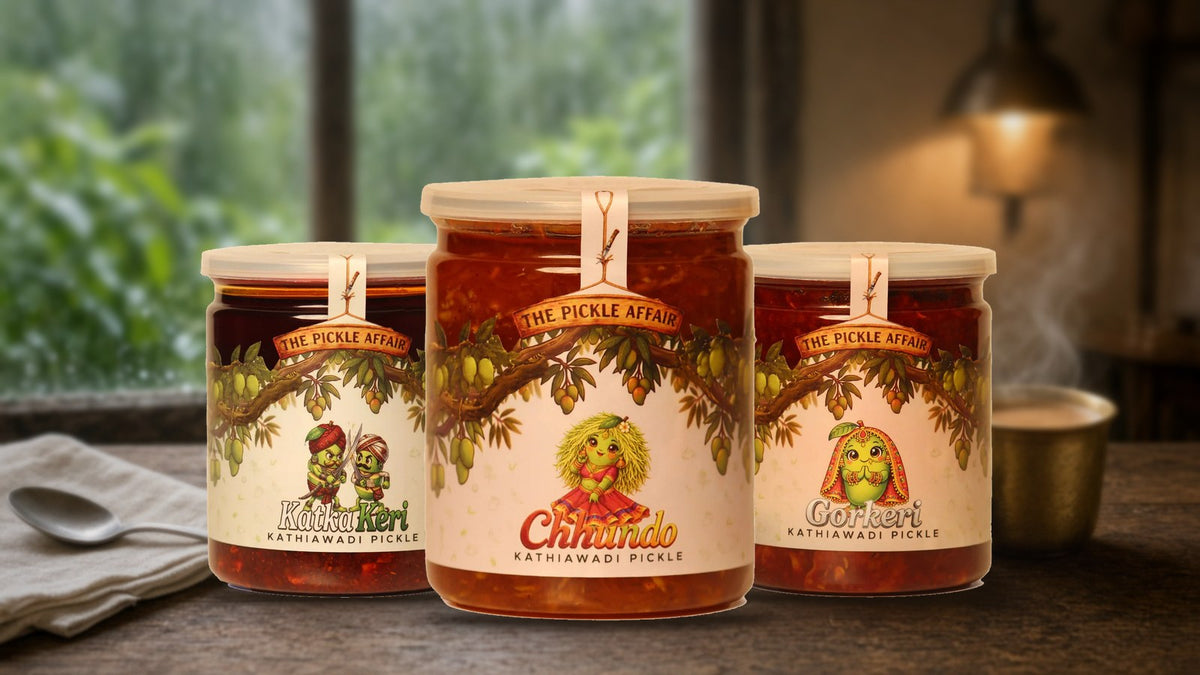
Chhundo | Sweet Shredded Mango Achar
Handmade Kathiawadi pickle — ships across India.
View Chhundo | Sweet Shredded Mango Achar →
Katka Keri Pickle | Homemade Gujarati Mango Achar
Handmade Kathiawadi pickle — ships across India.
View Katka Keri Pickle | Homemade Gujarati Mango Achar →
Gor Keri | Jaggery Mango Achar
Handmade Kathiawadi pickle — ships across India.
View Gor Keri | Jaggery Mango Achar →Frequently asked questions
Which pickle is best for travel?
Low-oil, relish-style pickles like Chhundo travel best. Gor Keri and drained Katka Keri also travel well in a tightly sealed container.
How do I pack pickle so it does not leak?
Decant a small amount, wipe the rim, close the lid tightly, seal the joint with cling film, and pack it upright inside a zip bag.
Can I carry pickle on a flight?
Rules vary by airline and country. Oily or syrupy pickles may count as liquids or gels in hand luggage, so check the current rules before you fly.
How should I store pickle in a hostel?
Keep the jar tightly closed in a cool, dry cupboard away from sunlight and heat, use a clean dry spoon, and follow the storage directions on the label.
What goes well with pickle on a train journey?
Thepla, puri, khakhra and dry sabzi are the classic partners. Pack them separately from the pickle so they stay dry.
How do I remove pickle oil stains from clothes?
Blot the oil, sprinkle talcum powder or cornflour on the stain, let it sit, brush it off and wash as usual.
Does The Pickle Affair use synthetic colours?
No. Colour comes from the spices, turmeric, chilli, and mango themselves.
Who makes The Pickle Affair pickles?
The Pickle Affair is a brand of Arham Foods, packed in Maharashtra under FSSAI licence 21521053000490.
Conclusion
Packing pickle for travel comes down to small portions, tight lids and dry spoons. Choose low-oil styles like Chhundo, keep the container upright and away from heat, and your achar will taste like home wherever you are.


Leave a comment
Your email address will not be published. Required fields are marked *